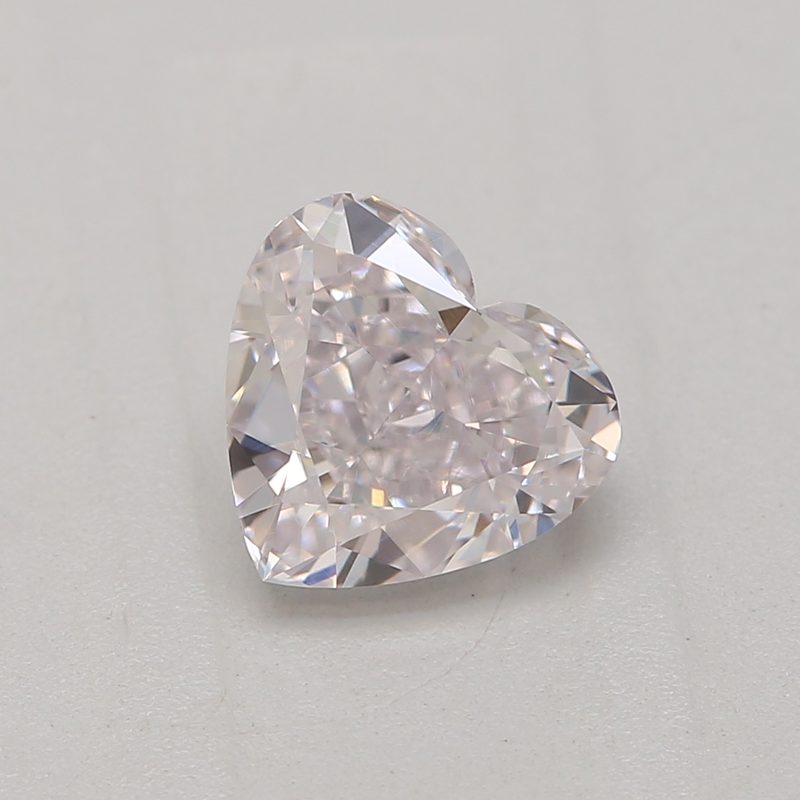
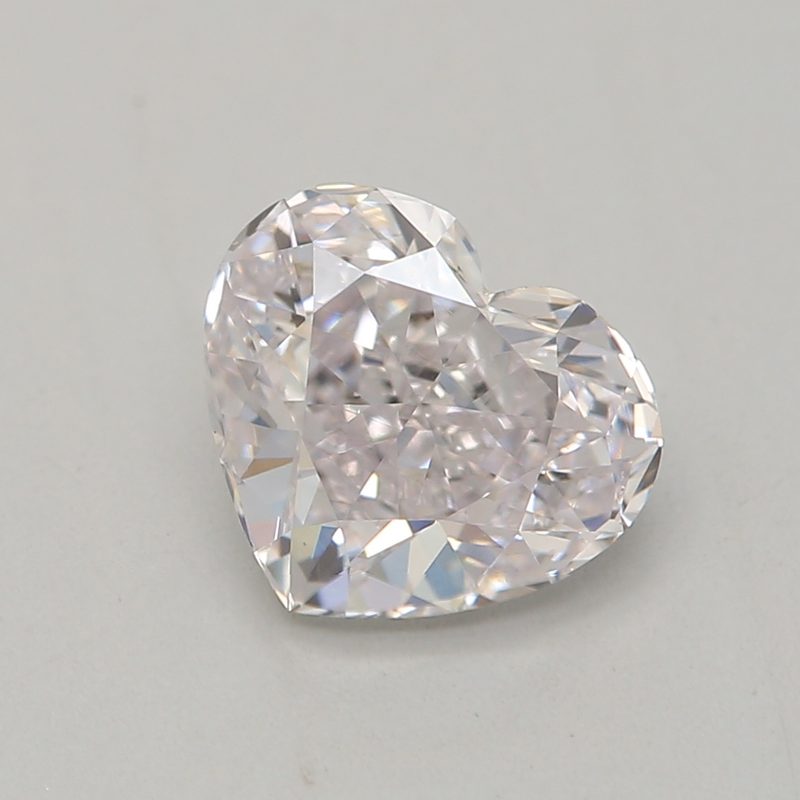
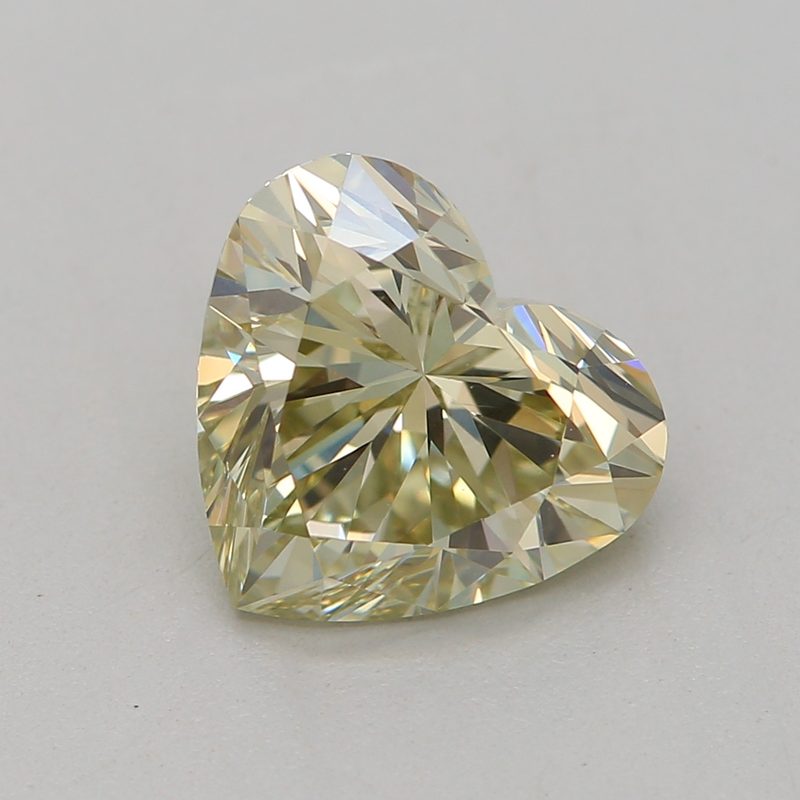
Symmetry above everything. The two lobes should be the same size and height, the cleft between them distinct and centred, and the point directly opposite that cleft. A heart that is even slightly lopsided reads as wrong immediately, and nothing in the setting corrects it.
What is the minimum size for a heart shaped diamond?
Below about 0.50 carat the outline becomes hard to read once set — from a normal viewing distance it can look like a round with a notch. Half a carat is a practical floor, and larger reads far more clearly.
What length-to-width ratio should a heart have?
Close to 1.00, meaning as wide as it is long. Narrower looks pinched; wider looks squat. There is much less acceptable range here than with other fancy shapes.
How should a heart shaped diamond be set?
With a V-prong protecting the point and prongs at the outer edge of each lobe. The cleft should be left visible — covering it with metal destroys the only feature that makes the shape legible.
Do hearts show a bow-tie?
They can, across the widest part of the lobes. It is usually less pronounced than in a marquise or pear, but it is worth checking in video before buying.
What clarity should I look for in a heart?
VS2 or better is a safe choice. The cleft area draws the eye, so an inclusion near the centre of the stone is more noticeable here than the same inclusion would be in an oval.
See new stones first
Every stone is photographed and graded before it is listed. Join the list to see them before they reach the shop.
New stones only, no more than once a month. Unsubscribe any time.