Brown Color Diamond Explained
On this page
If you have ever seen the term “chocolate diamond” on a jewelry tag and wondered what it actually means in gemological terms, you are not alone. Brown diamonds are one of the most misunderstood stones in the fancy color world, and one of the most aggressively marketed.
Harsh Shah, Director at PASAVAJA Gems LLP and a specialist in fancy color diamond grading, has spent years cutting through exactly this kind of marketing confusion. His position is clear: trade names like chocolate, cognac, and champagne sound beautiful, and some of these stones genuinely are, but they tell you nothing about the actual GIA color grade, the stone’s saturation, or its true market value. Knowing the difference between a trade name and a GIA grade could save you a significant amount of money, or help you recognize when a brown diamond is genuinely exceptional.
This guide will walk you through everything you need to know about natural brown diamonds, what causes their color, how GIA grades them, what those appealing trade names actually correspond to, and when a brown diamond is genuinely worth buying. If you already know what you are looking for, browse our natural brown diamonds for sale.

What Is a Brown Diamond?
A brown diamond is a natural diamond whose body color falls within the brown range, from a very faint warm tint all the way to a deep, rich, saturated brown. Brown diamonds are the most commonly occurring fancy color diamonds in the world, found in significant quantities in mines across Australia, South Africa, and Russia.
Their color is caused primarily by a structural phenomenon in the diamond crystal called plastic deformation. During the diamond’s formation deep in the earth, extreme pressure creates distortions in the crystal lattice. These distortions absorb certain wavelengths of light, producing the characteristic brown, champagne, or cognac appearance.
Because brown is the most abundant fancy color, these diamonds are generally more accessible in price compared to rarer colors like pink, blue, or green. But “more accessible” does not mean “less interesting.” Some brown diamonds with rich orange or yellow secondary hues are genuinely striking stones, and a deeply saturated Fancy Dark brown can be a dramatic centrepiece in the right setting.
What matters most is understanding what you are actually buying, the GIA grade, the secondary hue, and the saturation level, not the trade name on the jewelry store’s label.
The Trade Name Reality: Chocolate, Cognac, and Champagne
Trade names like chocolate, cognac, and champagne describe brown diamonds in marketing terms that are not recognized by GIA or any gemological authority. These names are commercial brand language, created by jewelry retailers to make brown diamonds sound more luxurious and desirable.
The most famous example is Le Vian’s Chocolate Diamond, which is a registered trademark. Le Vian specifies internal quality standards for their Chocolate Diamonds (SI1 clarity or better, Fancy or higher color), but the name itself is a brand designation, not a GIA grade. Two diamonds sold as “chocolate” by two different retailers may have completely different GIA color grades, saturation levels, and secondary hues.
Here is what each trade name generally corresponds to in real gemological terms:
Champagne diamonds typically refer to lighter brown stones with a golden or straw-colored appearance. In GIA language, these range from Faint to Light brown in saturation, often with yellow as a secondary hue.
Cognac diamonds describe medium to deeper brown stones with warm orange or reddish-brown tones. GIA would likely grade these as Fancy or Fancy Intense brown, often with orange as a secondary modifier.
Chocolate diamonds generally refer to rich, deeply saturated brown stones. Depending on saturation, these could be GIA Fancy, Fancy Intense, or Fancy Deep brown.
The practical problem is this: without seeing the GIA certificate, you cannot know which GIA grade a “cognac” or “chocolate” diamond actually received. Two stones priced similarly under a trade name could have very different GIA grades, and very different actual values.
Harsh Shah puts it directly: “Trade names like chocolate or cognac sound appealing but tell buyers nothing about the actual GIA grade. Always ask for the GIA certificate before assessing value.”
This is not a reason to avoid brown diamonds. It is a reason to understand them properly before buying.
How GIA Grades Brown Diamonds
GIA uses the same fancy color grading system for brown diamonds that it applies to all other fancy color diamonds. This is completely separate from the D-to-Z white diamond color scale. If you are new to fancy color grading, it is worth reading our complete guide to fancy color diamonds before going further.
GIA grades fancy color diamonds across three dimensions: hue, tone, and saturation. For a brown diamond, the hue is brown, but the GIA report will also note any modifying colors, which significantly affect the stone’s appearance and value.
The GIA color saturation scale for fancy colors runs from:
- Faint
- Very Light
- Light
- Fancy Light
- Fancy
- Fancy Intense
- Fancy Vivid
- Fancy Deep
- Fancy Dark
Most brown diamonds fall in the Faint to Fancy range. Deeply saturated Fancy Intense or Fancy Deep brown diamonds are less common and command higher prices within the brown category.
The GIA report for a brown diamond will state the primary color and any secondary modifiers. Common descriptions include: Fancy Brown, Fancy Yellowish Brown, Fancy Orangy Brown, Fancy Dark Brown, or Fancy Brownish Orange (where orange is the primary hue).

Shades and Secondary Colors in Brown Diamonds
The secondary hue in a brown diamond dramatically changes its appearance and its desirability. Not all brown diamonds look the same, and understanding secondary hues is the key to finding a stone with genuine character.
Here are the most significant secondary hues and what they mean:
Yellowish Brown / Yellow-Brown: The most common combination. Warm and golden in tone. These tend to be the most affordable in the brown family.
Orangy Brown: A richer, warmer appearance with visible orange undertones. Cognac-style stones typically fall here. These are more visually interesting and are priced accordingly.
Pinkish Brown: A softer, rosy appearance. Relatively rare as a combination and can be quite beautiful in rose gold settings.
Brownish Orange: Here orange is the primary hue, modified by brown. These stones cross over into the orange category and are valued more closely with orange diamonds than typical browns. For context on how rare orange is, see our article on fancy color diamonds.
The GIA report always lists the primary hue first. If the report says Fancy Brownish Orange, the stone is predominantly orange with a brown modifier, a meaningfully different stone than a Fancy Orangy Brown, where brown dominates.
Brown Diamond Price and When They Offer Genuine Value
Brown diamonds are generally the most affordable fancy color diamonds by carat weight, which makes them genuinely accessible for buyers who want a natural colored stone without the premium of pink, blue, or yellow.
Price ranges vary based on the GIA color grade, secondary hue, clarity, and carat weight. As a realistic guide:
| Trade Name | GIA Grade Equivalent | Hue | Price Range (per carat, GIA certified) | PASAVAJA View |
|---|---|---|---|---|
| Champagne | Faint to Light Brown | Yellow-Brown | USD 500 to 2,500 | Entry point; good for fashion jewelry |
| Cognac | Fancy to Fancy Intense Brown | Orangy Brown | USD 2,500 to 8,000 | Best visual interest in the brown family |
| Chocolate (standard) | Fancy Brown | Rich Brown | USD 1,500 to 5,000 | Popular but verify GIA grade before buying |
| Deep Cognac / Orangy Brown | Fancy Intense to Fancy Deep Brownish Orange | Orange-Brown | USD 5,000 to 20,000+ | Approaches orange diamond territory; rare |
| Fancy Dark Brown | Fancy Dark Brown | Deep Brown | USD 2,000 to 7,000 | Dramatic and dramatic in the right setting |
Prices are approximate retail ranges for GIA-certified natural diamonds in 1-carat weights as of 2025. Prices increase significantly for larger stones and for stones with exceptional secondary hues.
What drives value up within brown diamonds is the secondary hue. An orangy brown or pinkish brown with strong saturation is more desirable and more valuable than a generic yellowish brown at similar size and clarity. The saturation grade matters too, a Fancy Intense brown always commands more than a plain Fancy brown.
What keeps brown diamonds accessible is their relative abundance. If you are looking for a natural fancy color diamond with warmth and character at a price point well below yellow or pink, a well-chosen cognac or orangy brown is genuinely worth considering.
Expert Buying Tips for Brown Diamonds
Buying a brown diamond well requires seeing past the trade name and evaluating the actual GIA certificate. These are the most important factors to understand before you purchase.
Always request the GIA certificate. The certificate tells you the actual color grade, the secondary hue, the clarity, and the carat weight. No trade name can substitute for this information. A reputable seller will have no hesitation providing it.
Pay close attention to the secondary hue. As explained above, the secondary hue often matters more than the primary grade. Orangy brown and pinkish brown stones have more personality and higher demand than plain yellowish brown stones at similar saturation.
Saturation matters significantly. A Fancy Intense brown looks dramatically richer than a Fancy Light brown, and the price difference reflects that. Decide what visual depth you want before setting a budget.
Clarity standards are more flexible in brown diamonds. Unlike colorless diamonds, where clarity is highly scrutinised, some eye-clean brown diamonds with VS2 or SI1 clarity look perfectly beautiful in real-world viewing. Let your eye guide you here. GIA will note if inclusions are visible to the naked eye.
Understand what you are comparing. If you are comparing a trade-named “cognac” from a retail jeweler with a GIA-graded Fancy Intense Orangy Brown from a wholesale source, you may be looking at very different stones with very different valuations. The GIA grade is the only common language.
Consider recutting potential for antique shapes. Some brown rough is exceptional material. Certain collectors and connoisseurs specifically seek rose cut or old mine cut brown diamonds, which have a romantic warmth that modern brilliant cuts can rarely match. If that appeals to you, speak with a specialist who understands antique and rare diamond shapes.
Setting Recommendations for Brown Diamonds
The right metal setting has a significant effect on how a brown diamond looks in wear. This is one of the most practical decisions you can make to enhance the stone’s appearance.
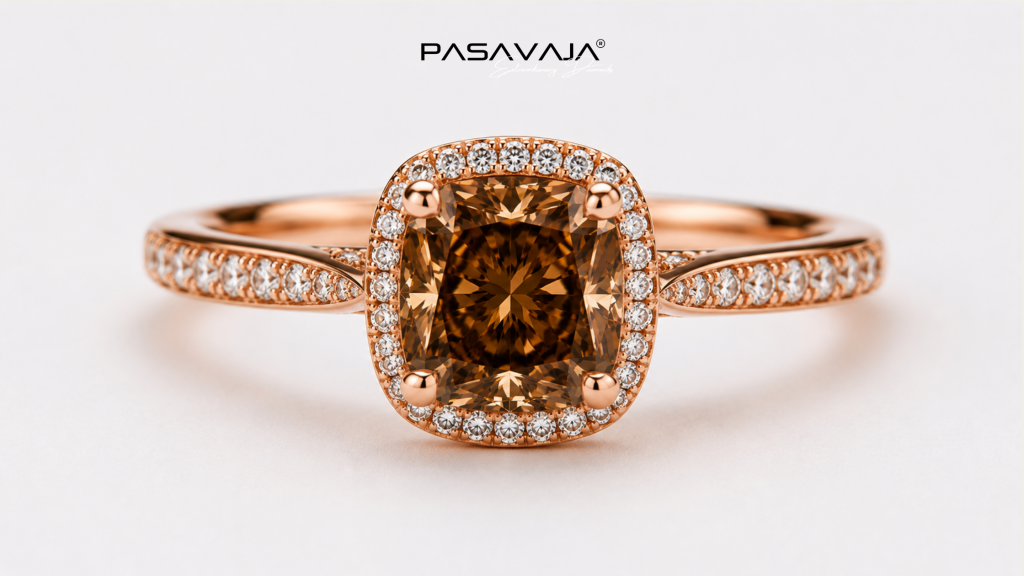
Rose gold is the most natural partner. The warm, slightly pinkish tone of 18K rose gold mirrors and amplifies the warmth in brown and cognac diamonds. A cognac brown stone in rose gold looks richer and more intentional than the same stone in white metal.
Yellow gold works well for deeper, more saturated browns. A Fancy Deep or Fancy Dark brown in 18K yellow gold looks rich and earthy, a strong, confident aesthetic that suits statement pieces.
White gold and platinum are less ideal for most brown diamonds, as the cool contrast can make the stone look less vibrant. The exception is a very lightly tinted champagne diamond where the contrast adds a delicate warmth.
Bezel and halo settings protect the stone and enhance the color. A yellow or rose gold halo around a cognac brown diamond intensifies the warmth perceived in the center stone. This is a useful technique for lighter-saturation stones where you want more visual impact.
Avoid settings that compete with the stone. Brown diamonds are warm, earthy, and relatively subtle compared to vivid pink or yellow stones. Simple, elegant settings that let the stone’s natural warmth lead the design work best.
PASAVAJA’s Expertise in Fancy Brown and Cognac Diamonds
At PASAVAJA, we source natural brown diamonds with the same rigour we apply to every fancy color stone we handle. Harsh Shah evaluates each stone personally, assessing the GIA certificate, the actual color in controlled lighting, and the secondary hue before it becomes part of any recommendation we make to a client.
We do not dress brown diamonds up with trade names or use marketing language to obscure their actual grade. When you speak with us about a cognac or brown diamond, you receive the GIA grade, the secondary hue breakdown, a frank assessment of the stone’s strengths, and a pricing view grounded in current market reality.
Our sourcing covers:
- GIA-certified natural fancy color brown diamonds across all saturation grades
- Orangy brown and cognac stones with exceptional secondary hues
- Antique cuts including rose cut and old mine cut brown diamonds for collectors
- Custom jewelry manufacturing in 18K yellow gold, rose gold, and platinum
- Bespoke design to maximize the visual impact of your stone in the right setting
We offer free worldwide shipping and fully insured delivery on all orders. Every purchase is backed by personal guidance from Harsh Shah and the PASAVAJA team throughout the entire process.

Conclusion
Brown diamonds are genuinely beautiful natural stones, and they are also one of the most misrepresented categories in the jewelry market. The gap between what a trade name promises and what a GIA certificate reveals is larger here than in almost any other diamond category.
When you understand how GIA actually grades brown diamonds, what secondary hues to look for, and why saturation matters more than the store’s label, you are equipped to find a stone with real character at a price that reflects its actual market position. A Fancy Intense Orangy Brown with a clean eye and a warm rose gold setting is a genuinely compelling stone. Knowing how to identify it is the difference between a smart buy and an overpriced trade name.
Thinking about a natural fancy brown or cognac diamond? We would love to help you find the right stone.
Connect with Harsh Shah and the PASAVAJA team directly:
WhatsApp: +91 887 9999 787 (fast reply guaranteed) Email: info@pasavaja.com
We can help you with:
- Loose fancy color brown and cognac natural diamonds
- GIA-certified fancy color diamonds across all grades
- Antique and rare diamond shapes
- Bespoke fine jewelry in rose gold, yellow gold, and platinum
- Custom sourcing for exceptional secondary-hue brown diamonds
Get an Honest Brown Diamond Assessment: contact the team
FAQ
1. What is a brown diamond?
A brown diamond is a natural diamond whose body color falls in the brown range, caused by structural distortions in the crystal called plastic deformation. Brown is the most commonly occurring fancy color in nature. GIA grades them from Faint through Fancy Vivid, Fancy Deep, and Fancy Dark.
2. What is a chocolate diamond?
Chocolate Diamond is a registered trademark of Le Vian jewelry. It describes natural brown diamonds meeting specific quality standards, typically Fancy or higher GIA color grade and SI1 or better clarity. It is not a GIA grade. Other retailers may use the term loosely for any rich brown diamond.
3. Is a champagne diamond the same as a brown diamond?
Yes. Champagne is a trade name for lighter brown diamonds with yellow or golden tones. GIA grades these as Faint, Very Light, or Light Brown. There is no official gemological definition of champagne diamond. Always request the GIA certificate to understand the actual color grade.
4. What causes the brown color in a diamond?
Brown color in natural diamonds is caused by plastic deformation, structural distortions in the crystal lattice created by extreme pressure during formation. These distortions absorb certain wavelengths of light, producing brown, champagne, and cognac tones. No treatment is involved in genuine natural brown diamonds.
5. Are brown diamonds cheaper than other fancy color diamonds?
Generally yes. Brown is the most abundant fancy color, making brown diamonds more price-accessible than rare colors like pink, blue, or green. However, brown diamonds with exceptional secondary hues such as orangy brown or with deep saturation can command significantly higher prices within the category.
6. Is Le Vian Chocolate Diamond trademarked?
Yes. Chocolate Diamond is a registered trademark of Le Vian Corp. Only Le Vian can sell diamonds under that specific name. Other retailers using the word chocolate are using it as a generic descriptive term. Always verify the GIA certificate regardless of the trade name used by any seller.
7. What secondary hue makes a brown diamond most valuable?
Orangy brown and pinkish brown secondary hues are generally the most desirable within the brown category. A GIA-graded Fancy Intense Orangy Brown can approach orange diamond pricing. Yellowish brown is the most common and most affordable secondary hue in the brown diamond family.
Every stone is photographed and graded before it is listed. Join the list to see them before they reach the shop.
New stones only, no more than once a month. Unsubscribe any time.
Tell us the grade, shape and range. We will only send stones that genuinely match.