Yellow Color Diamond Explained
On this page
There is something about a yellow diamond that stops you in your tracks. That warm, sunlit glow, whether it is a soft lemon or a blazing canary, is unlike anything else in the natural diamond world. Harsh Shah, Director at PASAVAJA Gems LLP and one of the most authoritative voices on fancy color diamonds in the trade, has spent years sourcing, grading, and guiding buyers through exactly this category. If you are curious about yellow diamonds, what drives their color, how GIA grades them, and what you should realistically expect to pay, this guide covers everything you need to know before you buy.
What Is a Yellow Diamond?
A yellow diamond is a natural diamond that displays yellow as its dominant hue, caused by the presence of nitrogen atoms within the crystal structure during formation. On GIA’s fancy color scale, yellow diamonds range from Fancy Light Yellow through to the rare Fancy Vivid Yellow. They are the most commercially available of all fancy color diamonds and consistently among the most sought-after.
Yellow is the most common fancy color in the natural diamond world, which makes it more accessible than pink, blue, or red, but “more common” is entirely relative. A true Fancy Vivid Yellow is still extraordinarily rare. The color is caused by nitrogen absorbing blue light, allowing the yellow wavelengths to reflect back to the eye. The more nitrogen, the stronger and more saturated the yellow.
Yellow diamonds sit at a beautiful intersection of rarity and accessibility. They are rare enough to carry real collector value, especially at higher intensity grades, but available enough that you can actually find and buy one, which is not always true for other fancy colors.
To understand how yellow diamonds fit into the broader family of natural fancy color diamonds, the PASAVAJA Fancy Colored Diamond Education Hub is a good starting point.

Shades, Hues, and the Canary Diamond Trade Name
The word “canary” refers to a yellow diamond with an intense, saturated, pure yellow color, the kind that resembles the bright plumage of a canary bird. It is a trade term, not a GIA grading category, but it has become widely understood in the market to describe Fancy Intense or Fancy Vivid Yellow diamonds with a clean, pure yellow hue and no undesirable secondary tones.
Buyers often come to Harsh asking for a “canary diamond”, and that is a perfectly reasonable way to describe what they want. But it is important to understand that GIA certificates do not use the word canary. What you will see on a GIA report is the official intensity grade (Fancy Light, Fancy, Fancy Intense, Fancy Vivid) alongside a description of any secondary hues present.
Yellow diamonds can appear in a wide range of shades. A softer, lemon-toned stone might carry a Fancy Light Yellow grade. A deeper, richer yellow might be graded Fancy Intense. And the most saturated, purest yellows, the true canaries, earn the coveted Fancy Vivid designation.
Understanding this difference between the trade language and the GIA grading language will save you a lot of confusion when you start comparing stones.
GIA Grading and the Yellow Diamond Intensity Scale
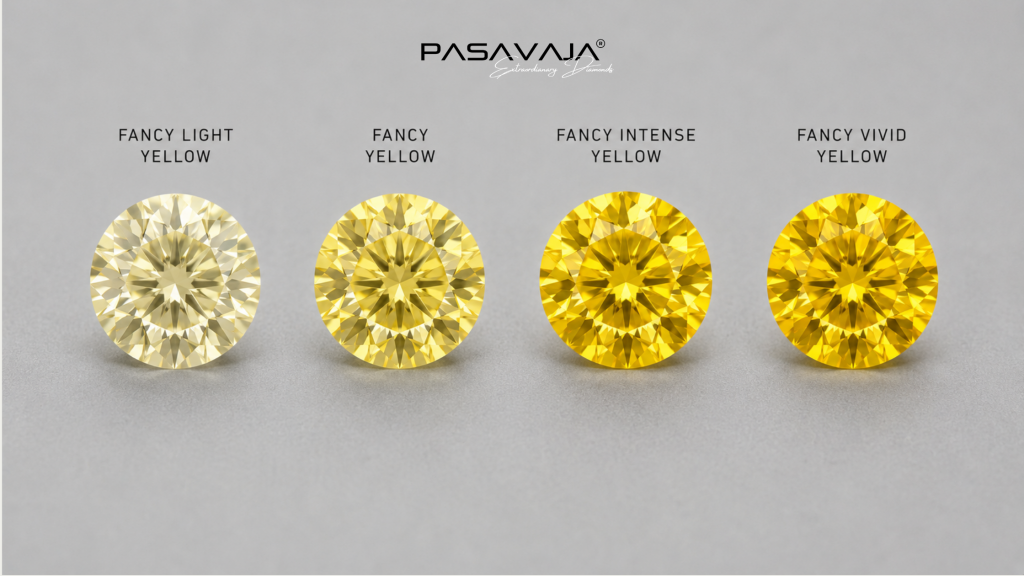
GIA grades yellow diamond color using a scale that runs from Faint through Fancy Vivid, with each step representing a meaningful increase in color saturation. For yellow diamonds specifically, the relevant grades on the commercial end of the scale are Fancy Light Yellow, Fancy Yellow, Fancy Intense Yellow, and Fancy Vivid Yellow.
Here is what each grade actually looks like and means:
Fancy Light Yellow, A perceptible but gentle yellow tone. Not as vivid as higher grades, but still an official fancy color designation. More affordable.
Fancy Yellow, A clear, visible yellow. This is often the starting point for buyers who want obvious color without paying premium Intense or Vivid prices.
Fancy Intense Yellow, A noticeably richer, more saturated yellow. The color is evident and commanding without the price jump of Fancy Vivid.
Fancy Vivid Yellow, The highest saturation and most pure, even distribution of color. These are the true canary diamonds. Rare, beautiful, and priced accordingly.
One thing Harsh always emphasizes to buyers: GIA’s color grading is assessed under controlled lighting conditions and by experienced gemologists. The grade on the certificate reflects the stone’s color objectively, but lighting in the real world varies. Always view a fancy color diamond in multiple lighting environments before buying.
Learn more about how GIA’s fancy color grading system works across all color families at GIA’s official diamond grading resource.
Rarity and Availability
Fancy color diamonds as a whole represent less than 0.1 percent of all natural diamonds mined globally. Yellow is the most commonly occurring fancy color, which puts it in a different rarity bracket compared to pink, blue, or red, but this should not lead you to underestimate yellow diamonds.
Fancy Light and Fancy Yellow grades are relatively available in the market. Fancy Intense Yellow is noticeably harder to source in good quality. Fancy Vivid Yellow, especially in larger carat weights with no undesirable secondary hue, is genuinely rare. A clean Fancy Vivid Yellow above 3 carats with a GIA report is the kind of stone that collectors and investors actively pursue.
The yellow diamond market is also global and competitive. Prices have risen steadily for top-grade yellows over the past decade, driven by consistent demand from buyers in the United States, Europe, Japan, and the Middle East.
Price Guide by Yellow Diamond Intensity Grade
Yellow diamond prices vary significantly based on intensity grade, carat weight, secondary hue, and overall quality. The table below reflects realistic price ranges for GIA-certified natural yellow diamonds in the current market. All prices are approximate and per carat in USD.
| GIA Intensity Grade | Visual Character | Rarity Level | Approx. Price Per Carat (USD) | Investment Appeal | Best Setting |
|---|---|---|---|---|---|
| Fancy Light Yellow | Subtle, lemon-toned | Moderate | $3,000 – $6,000 | Moderate | White gold, platinum |
| Fancy Yellow | Clear, visible yellow | Moderate | $6,000 – $12,000 | Moderate to good | Yellow gold, white gold |
| Fancy Intense Yellow | Rich, saturated yellow | Good rarity | $12,000 – $20,000 | Good | Yellow gold, halo settings |
| Fancy Vivid Yellow | Maximum saturation, pure canary | High rarity | $20,000 – $60,000+ | Strong | Yellow gold, rose gold |
Prices climb sharply from Fancy Intense to Fancy Vivid because the jump in color saturation at that level is dramatic and visually obvious. A 1-carat Fancy Vivid Yellow can cost three to four times more than a 1-carat Fancy Intense Yellow of comparable quality, and that premium is justified by genuine rarity.
For personalized pricing based on the specific grade, carat, and shape you are looking for, request a yellow diamond price quote directly from the PASAVAJA team.
Secondary Colors and Their Impact on Value
One of the most misunderstood aspects of yellow diamond buying is the role of secondary hues. Almost every yellow diamond on the GIA certificate will carry a secondary color descriptor alongside the primary yellow, and that descriptor has a real and significant impact on value.
The GIA describes secondary hues in the certificate color description. Common secondary hues in yellow diamonds include orange, green, and brown. Each affects value differently:
Orangy Yellow, An orange secondary hue adds warmth and is generally considered desirable. Orangy Fancy Vivid Yellow diamonds are among the most prized in the market. The secondary hue reads as richness rather than dilution.
Greenish Yellow, A green secondary hue is less common. In small quantities it can add a fresh, bright quality. In stronger concentrations it can make a stone appear less saturated in normal lighting.
Brownish Yellow, Brown as a secondary hue is the most value-reducing. It muddies the color and makes the yellow appear less vivid and clean. At the Fancy Intense and Fancy Vivid level, the presence of a brown secondary can reduce price by 20 to 40 percent compared to a pure yellow of the same grade.
Harsh puts it simply: when evaluating a yellow diamond, the secondary hue is often more important than the intensity grade alone. A pure Fancy Intense Yellow will outperform a brownish Fancy Vivid Yellow in visual appeal, and the market agrees.
This is why GIA certification is not optional for fancy color diamonds. The certificate records the secondary hue precisely. Without that documentation, you are guessing, and guessing with a valuable stone is never a good idea.

Expert Buying Tips for Yellow Diamonds
Buying a fancy color diamond is a different process from buying a white diamond. The 4Cs still apply, but the hierarchy shifts, and the nuances matter far more than they do for colorless stones.
Here is what Harsh recommends for anyone buying a yellow diamond:
Always buy GIA-certified. This is non-negotiable for fancy color. GIA is the only laboratory whose color grading for fancy diamonds is globally recognized and trusted by the trade. A non-GIA certificate on a fancy color diamond carries significantly less credibility.
Understand the secondary hue before you commit. Ask your dealer to explain the secondary hue in plain language. Look at the stone in daylight, fluorescent light, and incandescent light. The secondary hue can behave very differently in different environments.
Prioritize intensity grade over carat weight. A smaller Fancy Vivid Yellow will almost always be more beautiful and more valuable than a larger Fancy Light Yellow. Color drives the beauty of these stones.
Ask about the shape’s impact on color. Cushion and radiant cuts tend to concentrate color beautifully in yellow diamonds. Oval and pear shapes also work well. Round brilliants in yellow are rarer and typically command a premium because the modern round cut sacrifices some color depth.
Consider the origin when it matters to you. Yellow diamonds come from mines in Africa, Australia, and other regions. If origin traceability matters to you, for ethical or investment reasons, ask your dealer specifically about sourcing.
Set a realistic budget and work backwards. Rather than starting with a carat size, define the intensity grade you want and then find the best quality stone within that grade at your budget. This approach almost always leads to a better outcome.
For more on how to think about fancy shape diamonds and how cut interacts with color, the PASAVAJA Fancy Shape Diamond Guide is worth reading alongside this article.
Popular Settings and Jewelry Styles for Yellow Diamonds
Heer Shah, who leads jewelry design and bespoke manufacturing at PASAVAJA, has worked with yellow diamonds across a wide range of settings and styles. His view is clear: the setting choice for a yellow diamond is as important as the stone itself.
Yellow gold is the traditional choice, and for good reason. Yellow gold enhances and amplifies the warm tones of the diamond. A Fancy Yellow or Fancy Intense Yellow set in 18K yellow gold will appear more saturated and vivid than the same stone set in platinum. This is not a trick: it is a genuine enhancement through complementary color.
Rose gold works beautifully with lower-intensity yellows. The warm pink tones of rose gold complement Fancy Light and Fancy Yellow grades, adding richness to stones that might otherwise appear slightly pale.
Platinum and white gold work for contrast. If you want the yellow of the diamond to pop against a clean, modern background, particularly for higher-saturation stones like Fancy Vivid Yellow, platinum or 18K white gold provides that crisp contrast. This approach works especially well for halo settings where the surrounding white diamonds frame the center stone.
Halo settings are the most popular choice for yellow diamonds, and for practical reasons. The white diamond halo creates a boundary that makes the yellow center stone appear larger and more intensely colored. It is also a highly elegant design that suits both cushion and oval shapes well.
Bezel settings offer excellent protection for yellow diamonds used in everyday jewelry. If the stone is going into an engagement ring that will be worn daily, a bezel or semi-bezel provides security while still showing the color beautifully.

PASAVAJA’s Expertise in Yellow Diamonds
PASAVAJA Gems LLP is a second-generation natural diamond house based in Mumbai, with direct access to the international rough and polished diamond trade. Fancy color diamonds, and yellow diamonds specifically, sit at the heart of what PASAVAJA does.
Every yellow diamond sourced by PASAVAJA is personally reviewed by Harsh Shah. He assesses not just the GIA certificate but the stone itself, evaluating how the color appears face-up, what the secondary hue looks like in natural and artificial light, and whether the cut maximizes the color depth. This level of evaluation is not something you get from an online listing or a standard retail purchase.
For buyers who want to view yellow diamonds in person, PASAVAJA offers direct consultations. For international buyers, the team provides detailed video and image documentation with natural daylight and studio lighting so you can assess the color accurately before committing.
All PASAVAJA yellow diamonds are:
- GIA certified (mandatory for fancy color)
- Sourced from vetted, trusted trade suppliers
- Personally evaluated by Harsh Shah prior to any recommendation
- Available as loose stones or set in bespoke fine jewelry
PASAVAJA offers bespoke jewelry manufacturing in platinum and 18K gold, yellow, white, and rose. Heer Shah oversees every bespoke commission, from initial design to final setting. If you want a yellow diamond engagement ring, pendant, or collector piece designed around a specific stone, that is exactly the kind of work the team specializes in.
Delivery is fully insured and available worldwide. The team responds quickly via WhatsApp for buyers who want a fast, direct conversation before making a decision.
Conclusion: Is a Yellow Diamond Right for You?
Yellow diamonds offer something that colorless diamonds simply cannot, a warm, vivid, emotionally resonant color that is entirely natural and backed by one of the world’s most rigorous grading systems. Whether you are drawn to the gentle warmth of a Fancy Light Yellow or the blazing intensity of a Fancy Vivid canary, there is a yellow diamond that fits your vision and your budget.
The key is buying correctly. GIA certification, secondary hue awareness, and working with someone who actually knows fancy color diamonds, not just white diamonds, will make an enormous difference to your final satisfaction.
If you are ready to explore yellow diamonds seriously, the PASAVAJA team is here to help you find the right stone and set it beautifully.
Connect with the PASAVAJA team directly:
WhatsApp: +91 887 9999 787 (fast reply guaranteed) Email: info@pasavaja.com
We can help you with:
- Loose fancy yellow natural diamonds across all intensity grades
- GIA-certified yellow diamonds in all shapes
- Bespoke yellow diamond engagement rings and fine jewelry
- Investment-grade Fancy Vivid Yellow sourcing
- Custom design in platinum, 18K yellow gold, white gold, and rose gold
Get a Yellow Diamond Price Quote
FAQ
1. What causes yellow color in a diamond?
Yellow color in a natural diamond is caused by nitrogen atoms trapped in the crystal lattice during formation. These atoms absorb blue light and allow yellow wavelengths to reflect back to the eye. More nitrogen means a stronger, more saturated yellow color.
2. What is a canary diamond?
Canary diamond is a trade term describing a yellow diamond with intense, pure, saturated yellow color. It generally refers to GIA-graded Fancy Intense or Fancy Vivid Yellow stones with no undesirable secondary hue. GIA certificates do not use the word canary.
3. How much does a Fancy Vivid Yellow diamond cost?
A GIA-certified Fancy Vivid Yellow diamond typically starts around $20,000 per carat and can exceed $60,000 per carat for larger, purer stones. Prices vary based on carat weight, secondary hue, clarity, and overall quality.
4. What is the difference between Fancy Intense and Fancy Vivid Yellow?
Fancy Intense Yellow is a rich, clearly saturated yellow. Fancy Vivid Yellow is the highest saturation grade, deeper, more even, and with greater color strength. The price jump from Intense to Vivid is significant and reflects genuine rarity at that level.
5. Are yellow diamonds natural or treated?
Yellow diamonds can be natural or treated. Natural yellow diamonds get color from nitrogen during formation. Treated stones have color artificially induced through irradiation or HPHT processes. A GIA certificate clearly states if a stone is natural or treated, always verify before buying.
6. Do yellow diamonds look good in white gold or platinum?
Yellow diamonds work in white gold or platinum, but lower-intensity grades can appear paler in these metals. Yellow or rose gold is generally more flattering for Fancy Light and Fancy Yellow grades. Fancy Vivid Yellow stones have enough color to pop against platinum or white gold.
7. Is Fancy Vivid Yellow the rarest yellow diamond grade?
Yes. Fancy Vivid Yellow is the highest GIA intensity grade and represents the rarest, most valuable category of yellow diamonds. Fewer than one percent of all yellow diamonds graded by GIA achieve the Fancy Vivid designation, making these stones genuinely scarce.
Every stone is photographed and graded before it is listed. Join the list to see them before they reach the shop.
New stones only, no more than once a month. Unsubscribe any time.
Tell us the grade, shape and range. We will only send stones that genuinely match.