Old Mine Cut Diamond Guide
On this page
Every now and then, a diamond walks into a conversation that stops experts cold. For Harsh Shah, Director at PASAVAJA Gems LLP and one of the most respected voices on antique and rare diamond shapes in the trade today, the old mine cut diamond is exactly that kind of stone. It is not just a shape. It is a chapter of history you can hold in your hand. In this guide, we cover everything you need to know: what makes an Old Mine Cut unique, how it differs from modern cuts, how to evaluate one, and how to buy with confidence.
What Is an Old Mine Cut Diamond?
An Old Mine Cut diamond is a hand-fashioned brilliant-cut diamond produced primarily between the early 1700s and the late 1800s. It is the earliest recognisable form of the brilliant cut, characterised by a cushion-shaped outline, a small flat table, a high crown, a large open culet, and 58 facets. Every stone was cut entirely by hand, making each one genuinely one of a kind.
The name itself carries a story. “Old Mine” refers to the original diamond mines that supplied the world before South Africa’s diamond fields were discovered in the 1860s, primarily the legendary Golconda mines of India and, later, the alluvial mines of Brazil. Diamonds from these sources were known for their extraordinary clarity and a particular quality of light. When the South African mines opened and production exploded, stones from the older sources became known as “old mine” diamonds to distinguish them from the new supply. The name stuck, and today it refers specifically to the cutting style associated with that era.
If you want to understand why collectors and antique jewelry buyers find this shape so compelling, learn more about fancy and rare diamond shapes on our education page.

The Visual Characteristics That Define an Old Mine Cut
Old Mine Cut diamonds have a very specific anatomy that sets them apart from every modern shape. The small flat table sits at the top, far smaller than what you see in a modern round brilliant. The crown is high and steeply angled, giving the stone a pronounced domed appearance. The culet, the bottom point of the diamond, is polished into a flat facet rather than coming to a sharp point. When you look through the table from the front, you can often see that open culet as a dark circle at the center. It is one of the most distinctive visual signatures of this cut.
The girdle is typically uneven, hand-polished rather than perfectly round. The overall outline is cushion-shaped rather than circular. These are not flaws. They are the evidence of human craftsmanship at a time when every facet was placed by eye and feel, without the aid of modern bruting machines or computer-assisted cutting systems.
What this adds up to visually is a diamond that performs very differently from a modern brilliant. The facets are fewer, larger, and positioned to create bold, dramatic flashes of light rather than the continuous sparkle modern cuts are engineered for.
How Old Mine Cut Diamonds Perform in Light
Old Mine Cut diamonds were designed for candlelight, not electric light, and that distinction matters enormously.
In the 1700s and 1800s, diamonds were viewed almost exclusively by the warm, flickering light of candles. The high crown and large facets of an Old Mine Cut were specifically optimised to collect and return that kind of soft, directional light. The result is a stone that produces large, warm, romantic flashes rather than the smaller, more rapid sparkle of a modern round brilliant under bright LED lighting.
Under candlelight or warm tungsten light, at dinner, by firelight, in a dim restaurant, an Old Mine Cut can look more alive than almost any modern diamond. Under bright daylight or cool overhead lighting, it looks different. Not worse, but different. The flashes are broader and slower. Many buyers who fall in love with antique stones describe this quality specifically: it feels warmer, softer, more human.
This is not a stone for buyers who want maximum technical light performance scores. It is a stone for buyers who want character, romance, and a connection to history.

Old Mine Cut vs Old European Cut vs Modern Cushion
These three shapes are frequently confused, and it is worth understanding exactly how they differ.
| Characteristic | Old Mine Cut | Old European Cut | Modern Cushion |
|---|---|---|---|
| Era | 1700s to late 1800s | Late 1800s to early 1900s | 1990s to present |
| Outline | Cushion | Round | Cushion |
| Table Size | Small | Small to medium | Large |
| Culet | Large, open, visible | Small to medium | None (point) |
| Crown Height | Very high | High | Low to medium |
| Facet Style | Large, bold | Transitional | Brilliant-faceted |
| Cutting Method | Hand-cut | Early machine-assisted | Computer-optimised |
| Light Performance | Warm, dramatic flashes | Between Old Mine and modern | High brilliance, uniform sparkle |
The Old European Cut is the direct descendant of the Old Mine Cut, produced as diamond cutting equipment improved in the late Victorian and Edwardian eras. It retains the small table and visible culet but has a more consistently round outline. The modern cushion cut is a contemporary shape inspired by antique aesthetics but cut with modern proportions and tools, producing very different light performance.
If you are specifically interested in the modern cushion shape, we cover that in detail in our guide to the modern cushion, the contemporary descendant. If you want a fully modern round stone, our guide to white diamonds will give you the complete grading framework.
How Old Mine Cut Diamonds Are Graded
Old Mine Cut diamonds cannot be graded the same way as modern rounds, and any buyer needs to understand this clearly.
GIA does issue reports on antique cut diamonds, including Old Mine Cuts. However, GIA does not assign a cut grade to antique cuts in the same way they grade modern rounds. A modern Excellent cut grade reflects precise computer-measured proportions that produce optimal light performance. An Old Mine Cut’s proportions were set by human hands in a different century with entirely different objectives. Applying modern cut grading standards to an antique stone is not meaningful.
What GIA does assess is color and clarity. These grades are applied consistently across all diamond types. However, clarity assessment for antique stones sometimes requires additional context. Many Old Mine Cut diamonds are Golconda-origin stones or Brazilian stones from the pre-South African era, and some carry characteristics that a knowledgeable dealer can identify as consistent with those sources.
Harsh Shah explains it this way: “The name Old Mine Cut refers to the original diamond mines of India, Golconda, and later Brazil. This is a piece of history that few buyers know, and it gives these stones a connection to the very origins of the global diamond trade.” When you are sourcing an Old Mine Cut, you want a dealer who can read that history in the stone itself, not just in a certificate.
For authenticity, look for GIA certification, documented provenance where available, and a dealer with genuine expertise in antique cuts. Ask about the specific mine origin if it has been traced. Golconda diamonds, for example, are known for a type of clarity that comes from a different geological formation than South African stones, and that difference has real value in collector markets.

Expert Buying Tips for Old Mine Cut Diamonds
Buying an Old Mine Cut well requires a different mindset than buying a modern round brilliant. Here is what Harsh Shah recommends for any serious buyer:
Prioritise the culet. The size and visibility of the culet is the most distinctive visual element of an Old Mine Cut. A large, clearly visible culet is characteristic and authentic. Some buyers find it charming; others find it distracting. View the stone face-up before committing, and make sure you know how it looks to your eye.
Assess color in warm light. Old Mine Cuts were designed for candlelight. View any stone you are considering under warm incandescent or candlelight as well as daylight. A stone that looks slightly warmer in color under natural light may appear beautifully luminous under the lighting it was designed for.
Understand the cushion outline variance. No two Old Mine Cuts have the same outline. The hand-cut nature means length-to-width ratios and outline regularity vary significantly. This is not a defect: it is the authenticity of the cut. But you should decide in advance whether you prefer a more square or more rectangular cushion shape.
GIA certification is non-negotiable. Even for antique stones, a GIA report gives you independently verified color and clarity grades. This protects your investment and simplifies any future resale or insurance valuation.
Ask about origin. Not every dealer can tell you where an Old Mine Cut came from. PASAVAJA’s expertise in antique diamonds specifically includes knowledge of stone characteristics associated with Golconda and Brazilian sources. This is part of the value of buying from a specialist.
Condition matters. Check the girdle and facets for chips, abrasions, or wear. Hand-polished girdles are normal. Chips are not. Ask to view the stone under magnification.
For further reading on GIA grading standards as they apply to antique and rare diamond shapes, the GIA’s resource on diamond cut is the authoritative external reference.
Settings and Jewelry for Old Mine Cut Diamonds
The right setting dramatically changes how an Old Mine Cut looks and performs.
Yellow gold is the most historically authentic choice, and it is also optically forgiving for stones with warmer color grades. Many antique Old Mine Cuts were originally set in 18K or 22K yellow gold or rose gold, and that warm metal tone complements the stone’s natural warmth beautifully. A G or H color Old Mine Cut in yellow gold can look absolutely spectacular.
For buyers who prefer a whiter look, platinum or 18K white gold works well with higher color grades. A D-to-F Old Mine Cut in platinum is a genuinely striking combination, the cool metal emphasises the stone’s unusual light performance.
Setting style should be period-appropriate or deliberately contrasting. A simple four-claw or six-claw solitaire keeps the focus entirely on the stone. Antique bezel settings or milgrain-edged halos reinforce the historical character. A modern minimalist solitaire creates an interesting deliberate contrast that many contemporary buyers find appealing.
The high crown of an Old Mine Cut means the stone sits taller above the finger than a modern brilliant of the same carat weight. This affects prong height and setting depth. Work with a jeweler who has specific experience with antique cuts, the setting geometry is meaningfully different.
At PASAVAJA, Heer Shah oversees all bespoke jewelry manufacturing and can guide you on setting choices that protect and showcase an Old Mine Cut’s unique architecture. Choosing the right setting is as important as choosing the stone itself.
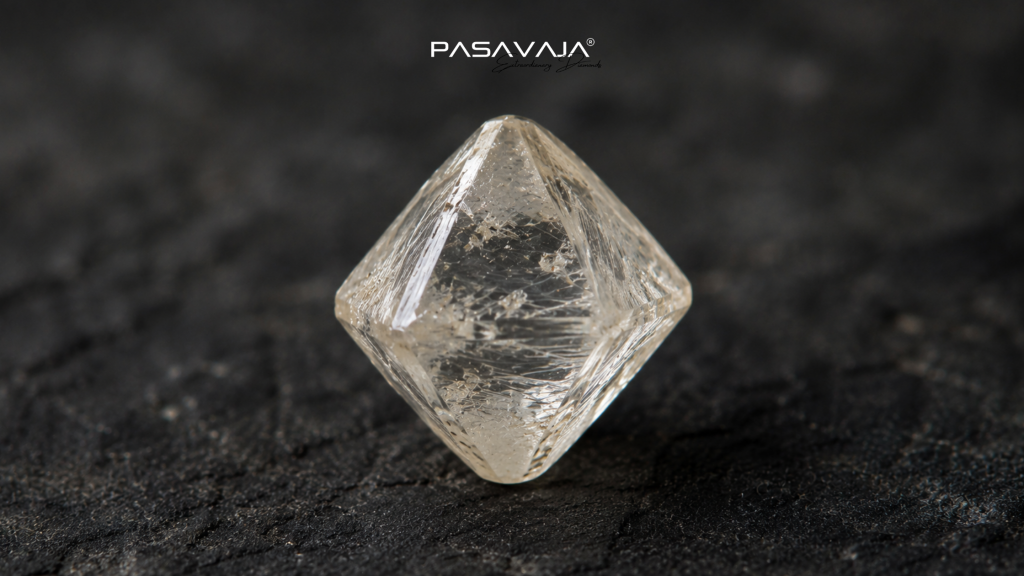
PASAVAJA’s Expertise in Old Mine Cut and Antique Diamonds
PASAVAJA Gems LLP specialises in exactly the category of stones that most diamond retailers simply do not carry or understand. Old Mine Cuts, Rose Cuts, Old European Cuts, and other antique and rare shapes are central to what Harsh Shah does, not a side category or a convenience offering.
Harsh’s credentials include GIA, De Beers Institute, and Rapaport Academy education, with a level of practical expertise in rare diamond grading and sourcing that is genuinely unusual in the trade. His knowledge of antique shapes includes understanding the historical context, the cutting evolution, and the specific gemological characteristics associated with old mine sources including Golconda.
When you buy an Old Mine Cut through PASAVAJA, you receive:
- Personally curated stone selection by Harsh Shah
- GIA-certified natural diamonds
- Provenance discussion where available
- Bespoke jewelry manufacturing through Heer Shah
- Transparent education throughout the buying process
- Free worldwide shipping with full insurance
- Direct WhatsApp and email access to the team
PASAVAJA is a second-generation diamond family business. Every significant sourcing decision involves Harsh personally. This is not a catalog business.
If you want to explore the broader world of antique and rare diamond shapes before focusing on Old Mine Cuts specifically, our diamond shapes education page is the right starting point.
Conclusion: Is an Old Mine Cut Diamond Right for You?
The old mine cut diamond is not for everyone, and that is precisely the point.
It is for buyers who want something no modern diamond can offer, a stone that was cut by human hands, possibly before your great-great-grandparents were born, from mines that no longer exist, in a style that was optimised for a world lit by candles rather than LEDs. It carries romantic light performance, genuine rarity, and a historical connection to the very origins of the diamond trade.
If you are a collector, a vintage ring buyer, or someone who simply wants a diamond with a story, an Old Mine Cut deserves your serious consideration.
Thinking about adding an Old Mine Cut or other rare antique diamond to your collection? We would love to help.
Connect with Harsh and the PASAVAJA team directly:
WhatsApp: +91 887 9999 787 (fast reply guaranteed) Email: info@pasavaja.com
We can help you with:
- Old Mine Cut and antique diamond shapes
- Loose fancy color natural diamonds
- Bespoke fine jewelry manufacturing
- GIA-certified investment-grade diamonds
- Custom sourcing for rare and one-of-a-kind stones
Visit us at contact the team
Frequently Asked Questions
Q: What is an Old Mine Cut diamond?
A: An Old Mine Cut diamond is a hand-fashioned brilliant-cut diamond produced between the early 1700s and late 1800s. It has a cushion-shaped outline, small table, high crown, and large visible culet. The name refers to the original “old mines” of India and Brazil that supplied diamonds before South African mines were discovered.
Q: Where does the name Old Mine Cut come from?
A: The name refers to the original diamond mines of the pre-South African era, primarily the Golconda mines of India and the alluvial deposits of Brazil. When South Africa’s diamond fields opened in the 1860s, older stones from these historic sources became known as “old mine” diamonds to distinguish them from the new supply.
Q: What is the difference between Old Mine Cut and Old European Cut?
A: The Old Mine Cut has a cushion-shaped outline and was produced earlier, roughly 1700s to late 1800s. The Old European Cut has a rounder outline and came later, from the late 1800s through the early 1900s, as cutting equipment improved. Both have high crowns, small tables, and visible culets.
Q: Are Old Mine Cut diamonds less brilliant than modern cuts?
A: They perform differently, not worse. Old Mine Cuts produce larger, warmer, more dramatic flashes of light, especially under warm or candlelight. Modern round brilliants produce more uniform continuous sparkle under bright lighting. Which you prefer is a matter of personal taste, not objective quality.
Q: How old does a diamond need to be to be called an Old Mine Cut?
A: Old Mine Cuts are typically dated to the period between the early 1700s and approximately 1890. The key identifier is the cutting style, not just the age. A stone cut by hand with the correct proportions, small table, high crown, large culet, cushion outline, is classified as Old Mine Cut regardless of exactly when it was produced.
Q: Are Old Mine Cut diamonds expensive?
A: Prices vary significantly based on carat weight, color, and clarity. Quality Old Mine Cuts from reputable sources typically range from approximately $3,000 to $20,000 per carat and higher for exceptional stones. Golconda-origin stones with documented provenance command significant premiums in collector markets.
Q: Does GIA certify Old Mine Cut diamonds?
A: Yes. GIA issues certificates for antique cut diamonds including Old Mine Cuts. GIA grades their color and clarity using the same standards applied to modern diamonds. However, GIA does not assign a cut grade to Old Mine Cuts the same way they do for modern rounds, because antique cuts have different proportions by design.
Every stone is photographed and graded before it is listed. Join the list to see them before they reach the shop.
New stones only, no more than once a month. Unsubscribe any time.
Tell us the grade, shape and range. We will only send stones that genuinely match.