Heart Shape Diamond Guide
On this page
If you are looking at heart shaped diamonds, you already know this is not just a purchase. It is a statement. The heart cut is one of the most emotionally resonant diamond shapes in the world, and also one of the most technically demanding to buy well. Get it right, and it is breathtaking. Get it wrong, and the shape simply does not read the way you imagined.
Harsh Shah, Director at PASAVAJA Gems LLP and Graduate Diamonds (GIA), judges a heart on one thing before anything else: whether the two lobes match. Symmetry is where this shape is won or lost, and it is the hardest thing to recover from, because a heart that is even slightly lopsided reads as wrong to the eye long before anyone measures it.
What Is a Heart Shaped Diamond?
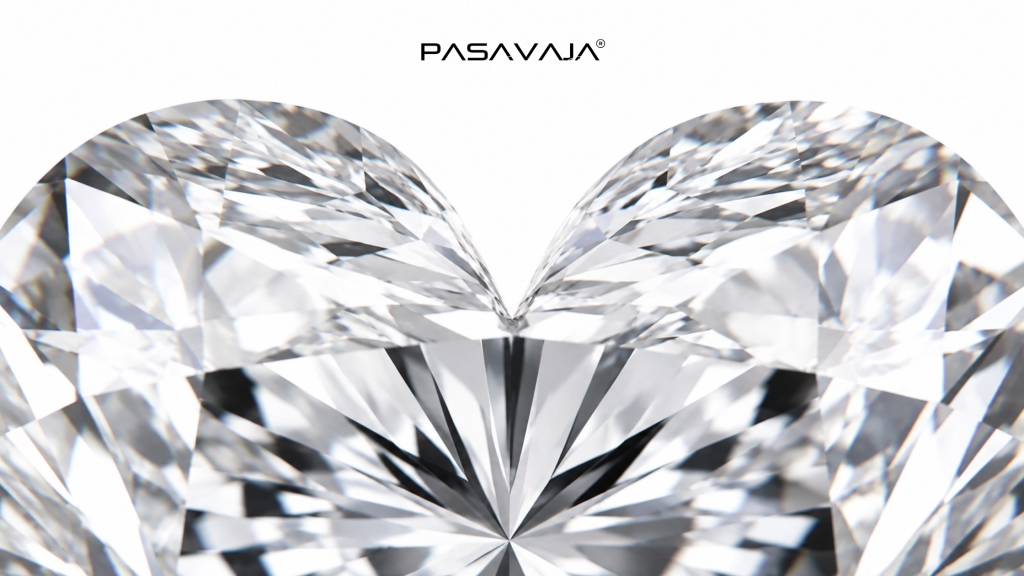
A heart shaped diamond is a fancy shape brilliant-cut diamond crafted to resemble a symmetrical heart. It features two rounded lobes at the top separated by a deep cleft, tapering down to a single point at the base. The shape requires exceptional cutting skill because any asymmetry is immediately visible to the naked eye.
The heart shape has 56 to 58 facets, similar to the round cut diamond and the pear shaped diamond, both of which share the brilliant facet arrangement that gives heart diamonds their sparkle. The heart shape is essentially a modified pear with a notched top, which means the cutter begins with pear proportions and then sculpts the cleft by hand.
Because the shape is complex and yield from rough is lower than simpler cuts, heart shaped diamonds carry a modest premium over comparable oval or pear cuts at the same carat weight and quality.
How Symmetry Defines a Heart Shaped Diamond
Symmetry is the single most important quality factor in a heart shaped diamond. When evaluating a heart diamond, the left and right lobes must be mirror images of each other, equal in width, equal in curvature, and equal in height. Even a slight difference between the two lobes will be visible to the naked eye once the diamond is set.
There are three symmetry elements to assess:
- Lobe symmetry, both lobes must be the same height and width when the diamond is oriented with the point down
- Cleft depth, the V-shaped notch at the top must reach at least 50% of the diamond’s length for the heart shape to read clearly; a shallow cleft produces a shape that looks more like a rounded teardrop than a heart
- Wing shoulders, the sides of the diamond, where the lobes curve outward, should be evenly curved and not flat or angular
GIA does not provide a specific cut grade for heart shaped diamonds the way it does for round cut diamonds. This means you cannot rely on a certificate cut grade alone. You must evaluate the diamond visually, either in person or through high-quality video provided by your dealer.
Always ask to see the diamond from the top (face-up view) and request a symmetry diagram if available. The GIA report will note whether symmetry is Excellent, Very Good, Good, Fair, or Poor, aim for Excellent or Very Good in symmetry.

Carat Weight and Minimum Size, What You Need to Know
Heart shaped diamonds have a size threshold below which the shape becomes difficult to recognize. The shape is only effective when it is large enough for both the cleft and the lobes to be clearly visible to the eye.
At PASAVAJA, the guidance is straightforward:
- For a pendant or necklace, 0.70 carats is the practical minimum. Below this weight, the shape can appear vague, especially once set in a bezel or prong mount.
- For an engagement ring, 1.00 carat or more is strongly recommended. At this size, the shape reads clearly on the finger and the cleft is well defined. Below 1.00 carat, a ring mount can obscure the lobes and the diamond simply looks round from a distance.
The table below shows how carat weight translates to approximate face-up millimetre dimensions for heart shaped diamonds. These are average measurements, actual dimensions vary depending on the exact cut proportions.
| Carat Weight | Approximate Width (mm) | Best Use |
|---|---|---|
| 0.50 ct | ~5.0 mm | Earring stud only |
| 0.70 ct | ~5.8 mm | Pendant minimum |
| 1.00 ct | ~6.5 mm | Ring minimum |
| 1.50 ct | ~7.5 mm | Ring, shape reads clearly |
| 2.00 ct | ~8.3 mm | Ring, highly recommended |
| 3.00 ct | ~9.5 mm | Statement ring or collector |
One practical advantage of the heart shape is that it appears larger face-up than a round brilliant at the same carat weight. The shape extends across the finger and the elongated outline creates visual presence beyond what the weight alone would suggest.
Explore our full fancy shape diamond guide to understand how different shapes compare in face-up size at equivalent carat weights.
How Much Does a Heart Shaped Diamond Cost?
Heart shaped diamonds are priced at a discount to round brilliants of equivalent quality, typically between 15% and 25% below a comparable round. This is because demand for the shape is lower, rough yield is more challenging, and the cutting process requires more skilled labour without a corresponding premium in the retail market.
For GIA-certified natural heart shaped diamonds, here are realistic price ranges as of current market conditions. All prices are in USD:
| Carat Weight | Color / Clarity | Approximate Price Range (USD) |
|---|---|---|
| 0.70 ct | G / VS2 | $2,500 – $3,500 |
| 1.00 ct | F / VS1 | $6,000 – $9,000 |
| 1.50 ct | E / VS2 | $12,000 – $18,000 |
| 2.00 ct | D / VVS2 | $25,000 – $38,000 |
| 3.00 ct | D / IF | $65,000 – $90,000+ |
Prices shift significantly based on symmetry quality. A heart diamond with GIA-rated Excellent symmetry will command a premium over one graded Good, sometimes 20% or more, even at the same color and clarity grade. This is worth paying for. A heart diamond with poor symmetry defeats the entire purpose of choosing the shape.
For colored heart shaped diamonds, premiums are substantial. A fancy yellow diamond in a heart shape, for example, will carry an additional premium for the shape’s rarity in colored stones. Very few cutters are willing to sacrifice rough weight to achieve a heart outline in a colored diamond, which makes them exceptionally collectible.
Expert Buying Tips for Heart Shaped Diamonds
Buying a heart shaped diamond well requires more attention to visual evaluation than almost any other shape. Here is what Heer Shah and the PASAVAJA team recommend:
Prioritise symmetry above everything else. Before color, before clarity, before carat, a heart diamond must be symmetrical. Ask for the GIA symmetry grade and request face-up video before making any decision. There is no point in paying for a beautiful color grade if the lobes are uneven.
Insist on a deep, well-defined cleft. The cleft should reach at least halfway down the diamond’s length. A shallow cleft produces a shape that looks like a rounded pear once set, losing the entire visual identity of the cut.
Choose G or H color for white metal settings. For platinum or 18K white gold, a G or H color grade gives you a diamond that faces up beautifully white without the cost of D, E, or F. In yellow gold, you can go to I or J color and the warmth of the metal will complement the stone. Learn more about how metal choice affects color perception on our diamond color guide.
VS1 or VS2 clarity is the sweet spot. Heart diamonds have a brilliant facet structure that does a good job of concealing inclusions. An eye-clean VS2 is typically indistinguishable from a VVS2 in normal viewing conditions. Focus on eye-clean over the highest laboratory grade.
Ask your jeweler to protect the point. The tip of a heart diamond, like a pear shaped diamond, is the most vulnerable part of the stone. The setting must include a V-prong or a protective bezel at the point. Do not accept a setting that leaves the point exposed.
Watch for the bow-tie effect. Some heart shaped diamonds exhibit a dark bow-tie shadow across the center when viewed face-up. This is caused by light leaking through the pavilion. It is more common in shallow or poorly cut hearts. Always review the diamond in video before buying.
Popular Settings and Jewelry Styles for Heart Shaped Diamonds
Heer Shah, Director at PASAVAJA Gems LLP, works closely with clients commissioning heart shaped diamonds into bespoke rings, pendants and one-of-a-kind pieces. His expertise in settings and craftsmanship makes him especially qualified to guide buyers through what follows.
The setting you choose for a heart shaped diamond does more than hold the stone in place. It determines how clearly the shape reads, how protected the diamond is, and how the light interacts with the facets.
Three-prong settings are the most popular choice for heart shaped diamonds. Two prongs sit on the lobes and one V-prong protects the point. This configuration keeps the diamond visible from all angles while securing it safely. Heer Shah designs three-prong settings specifically to ensure the lobes sit at equal height, an asymmetrical mount can make even a perfectly cut diamond look uneven.
Bezel settings offer full protection around the perimeter of the diamond, including the point. They are an excellent choice for buyers with active lifestyles who want the shape without worrying about chipping the tip. A bezel does partially obscure the edges of the stone, which can make it look slightly smaller than an open prong setting.
Halo settings add a ring of smaller round brilliants around the heart outline. This dramatically increases the perceived size and brilliance of the center stone. Heer recommends a halo for heart diamonds below 1.00 carat, as it reinforces the shape and makes the cleft more visible when viewed from a distance.
Metal recommendations:
- Platinum or 18K white gold, best for D to H color diamonds
- 18K yellow gold, beautiful with G to J color, and stunning with fancy yellow heart diamonds
- 18K rose gold, a romantic choice that complements the shape’s emotional character
For pendant settings, a simple bail at the top lobe allows the heart to hang point-down, the most natural and traditional orientation. For rings, the point should face toward the fingernail to elongate the appearance of the finger.

PASAVAJA’s Expertise in Heart Shaped Diamonds
At PASAVAJA, heart shaped diamonds are sourced personally and curated for symmetry quality before they are ever presented to a client. Heer Shah handles the jewelry design side: he has created bespoke heart diamond rings and pendants for clients across the US, UK, Europe, and Australia, and he brings a jeweler’s eye to stone selection that goes well beyond what a certificate can tell you.
Every heart shaped diamond at PASAVAJA is:
- GIA certified, with symmetry and polish grades evaluated before sourcing
- Selected for face-up symmetry in video and in person
- Assessed for cleft depth and bow-tie effect
- Available as a loose stone or as a bespoke jewelry commission
PASAVAJA is a second-generation natural diamond family business. Every significant sourcing decision is made personally by Harsh Shah or Heer Shah: you are never dealing with a sales team or an automated inventory system.
Services available for heart diamond buyers:
- Loose heart shaped natural diamonds in white and fancy colors
- Bespoke engagement rings, pendants, and collector pieces
- GIA-certified investment-grade heart diamonds
- Custom sourcing for larger or rare-color hearts
- Free worldwide shipping on all orders
- Fully insured delivery
- Personalized guidance via WhatsApp or email
Connect with Heer and the PASAVAJA team to discuss what you are looking for. Whether you need a 0.70ct pendant stone or a 3-carat collector piece, we can help you find it.
Conclusion, Is a Heart Shaped Diamond Right for You?
The heart shaped diamond is one of the most meaningful shapes in the world of diamonds. It carries emotional weight that no other cut quite matches. But it rewards buyers who approach it with the right knowledge. Symmetry is everything. Size matters more here than in most shapes. And the right setting is not optional: it is essential.
If you buy a heart diamond with Excellent symmetry, a deep cleft, and the right carat weight for its intended purpose, you will have a stone that turns heads and holds its beauty for a lifetime.
Ready to find your heart shaped diamond? We would love to help.
Connect with Heer Shah and the PASAVAJA team directly:
WhatsApp: +91 887 9999 787 (fast reply guaranteed) Email: info@pasavaja.com
We can help you with:
- Loose heart shaped natural diamonds in white and fancy colors
- Antique and rare diamond shapes
- Bespoke fine jewelry, rings, pendants, and commissions
- GIA-certified investment-grade diamonds
- Custom sourcing for one-of-a-kind pieces
Frequently Asked Questions
Q: What is the minimum size for a heart shaped diamond ring?
A: For an engagement ring, 1.00 carat is the practical minimum for the heart shape to read clearly on the finger. Below this, the cleft and lobes can be obscured by the setting or become hard to see from normal viewing distance. For a pendant, 0.70 carats is workable.
Q: How do I check the symmetry of a heart shaped diamond?
A: Look at the diamond face-up in a video or in person. Both lobes should be identical in height and width. The cleft should reach at least halfway down the diamond’s length. Check the GIA report, aim for Excellent or Very Good symmetry grade. Never buy a heart diamond without seeing it face-up first.
Q: Does GIA give a cut grade for heart shaped diamonds?
A: No. GIA provides cut grades only for standard round brilliant diamonds. For heart shaped diamonds, GIA grades symmetry and polish, but not overall cut. This means you must visually evaluate heart diamonds for proportion and symmetry, the certificate alone is not sufficient.
Q: What color grade should I choose for a heart shaped diamond?
A: G or H color is excellent for platinum or 18K white gold settings. I or J color works beautifully in yellow gold and costs noticeably less than D to F. The face-up color appearance of a G heart in white gold is virtually indistinguishable from a D to most buyers in normal lighting.
Q: What setting is best for a heart shaped diamond?
A: A three-prong setting, two prongs on the lobes and one V-prong at the point, is the most popular and practical choice. The V-prong at the tip is essential. If left unprotected, the point is the most vulnerable part of the stone and is at risk of chipping. A bezel setting is an excellent protective alternative.
Q: Is a heart shaped diamond a good investment?
A: Heart shaped diamonds have limited collector demand compared to round brilliants, so they are not typically purchased as investment-grade stones. However, larger heart diamonds above 2.00 carats in rare colors, especially fancy vivid yellow, pink, or blue, can hold significant value and are sought by collectors. Always buy GIA certified and prioritise symmetry for long-term desirability.
Q: Why does my heart diamond look like a teardrop and not a heart?
A: This is almost always caused by a shallow cleft. The V-shaped notch at the top of a heart diamond must be deep enough to clearly separate the two lobes. If the cleft is too shallow, the diamond reads as a rounded pear or teardrop. Always check cleft depth, ideally 50% or more of the diamond’s total length, before buying.
Every stone is photographed and graded before it is listed. Join the list to see them before they reach the shop.
New stones only, no more than once a month. Unsubscribe any time.
Tell us the grade, shape and range. We will only send stones that genuinely match.